EXTENDED EXHALE BREATHING

A Simple Way to Encourage Relaxation Through Your Breath.
Sometimes the most effective breathing techniques are also the simplest.
When stress, tension, or overwhelm begins to build, many people naturally start breathing faster and more shallowly.
The body shifts into a state of alertness, even when there is no immediate danger present.
Extended exhale breathing is a gentle practice that encourages the exhale to become slightly longer than the inhale.
New to The Healing Zone? Start here
There is no need for strict counting, forced breathing, or complicated patterns.
The goal is simply to slow the breath enough to create a greater sense of ease.
Throughout many years of working with meditation, sound healing, and relaxation practices, I've found that extending the exhale is one of the easiest techniques for beginners to learn.
It requires very little effort while offering a simple way to slow down and reconnect with the present moment.
What Is Extended Exhale Breathing?
Extended exhale breathing is exactly what it sounds like.
Instead of making the inhale larger or deeper, the focus shifts to allowing the exhale to take a little more time.
For example:
A gentle inhale
A slightly slower exhale
A relaxed pause before the next breath
The difference does not need to be dramatic.
Even a small extension of the exhale can help create a calmer rhythm.
The goal is not to hold the breath or push beyond what feels comfortable.
The practice works best when the breath remains smooth and natural.
Why Practice Extended Exhale Breathing?
Many people find that a longer exhale encourages the body to settle.
This technique is often used to:
Ease feelings of stress or overwhelm
Release physical tension
Create a calmer breathing rhythm
Support mindfulness and meditation
Help transition into rest or sleep
Encourage relaxation during busy days
Rather than trying to force calmness, extended exhale breathing creates space for relaxation to emerge naturally.
How to Practice Extended Exhale Breathing.
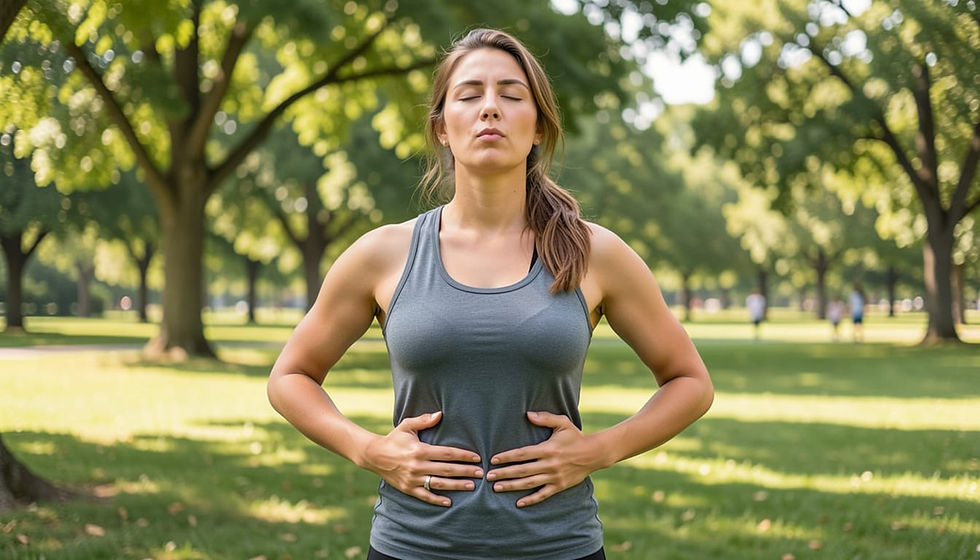
Find a comfortable seated or standing position.
Allow your shoulders to relax and let your breathing settle into a natural rhythm.
Then:
Take a gentle inhale through your nose.
Exhale slowly and comfortably.
Allow the exhale to last slightly longer than the inhale.
Keep the breath smooth and relaxed.
Repeat for several rounds.
You do not need to count.
Many people find it easier to simply focus on making the exhale feel slower and softer.
If the breath begins to feel strained, return to your normal breathing pattern and start again more gently.
Common Mistakes.
One of the biggest mistakes with breathing exercises is trying to do too much.
A few things to watch for:
Forcing a Long Exhale:
The exhale should feel comfortable.
If you feel tension, dizziness, or discomfort, shorten the breath and allow it to become more natural.
Focusing on Perfect Timing:
This is not a performance.
The goal is to create a gentle rhythm rather than achieve a specific count.
Holding Tension in the Body:
Notice your shoulders, jaw, and neck.
Allow these areas to soften as you breathe.
Relaxation often comes from the combination of a slower breath and a softer body.
When Should You Use This Technique?
Extended exhale breathing can be practiced almost anywhere.
Many people find it helpful:
Before sleep
During stressful moments
Before meditation
During work breaks
While sitting in traffic
Anytime they need a brief reset
Even one minute of practice can be beneficial.
Small moments of intentional breathing throughout the day often add up over time.
Practicing Along with the Guided Session
This guided exercise focuses on comfort rather than counting.
As you follow along, allow your inhale to remain gentle and natural.
Then simply let the exhale take a little more time.
There is no need to force deeper breaths or create a perfect pattern.
Instead, focus on feeling the breath gradually slow and soften.
The more relaxed the breath feels, the more effective the practice often becomes.
Final Thoughts.
Extended exhale breathing is a simple technique that can help create a greater sense of calm during stressful or busy moments.
By allowing the exhale to become slightly longer than the inhale, many people find it easier to slow down, release tension, and reconnect with the present moment.
Start with a minute or two and keep the practice comfortable.
There is no need to breathe perfectly.
Simply allow the breath to slow, soften, and find its own steady rhythm.


Comments